

Hidden Signals: New Research Rethinks Complete Spinal Cord Injury
Written by Justine Hamlin, PT, DPT, NCS
Rethinking Complete Spinal Cord Injury
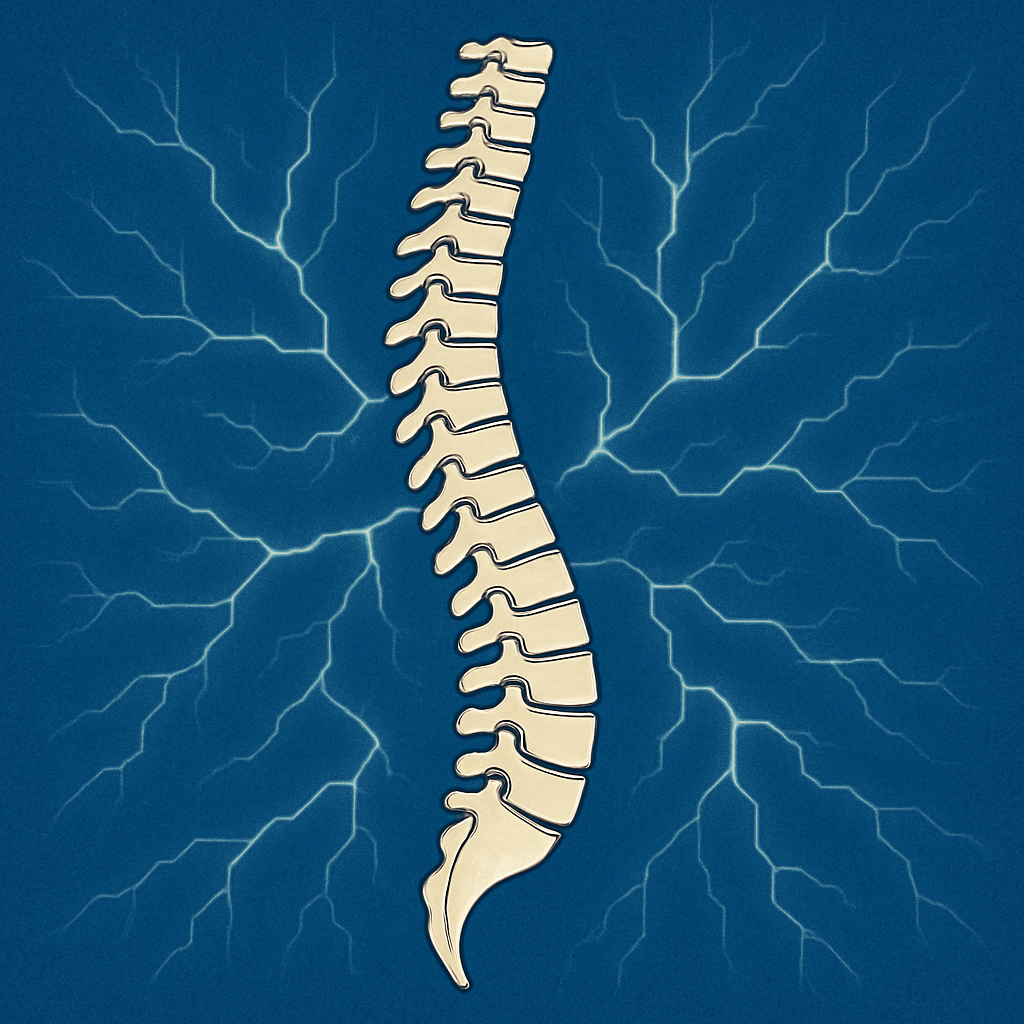
Picture a city hit by a major blackout. The lights are out, elevators frozen, traffic signals dead. From the outside, everything looks shut down. But deep in the grid, tiny circuits might still be flickering, not enough to power anything, but enough to show the system isn’t entirely gone.
Researchers studying spinal cord injury have found something similar in the human body. Many people who are told they have a “complete” spinal cord injury (meaning no movement or sensation below the injury) may still have faint trickles of communication crossing the damaged area. These are so quiet they don’t show up in a normal doctor’s exam, but with specialized tests, they can be detected. This state has a name: discomplete spinal cord injury.
What is “discomplete spinal cord injury,” anyway?
When we think of a spinal cord injury (SCI), we often picture a complete severing (loss of all communication between the brain and body below the lesion). But the term discomplete spinal cord injury describes something trickier: patients who are clinically diagnosed with a complete SCI (i.e. no voluntary motor or sensory function below the injury) but nevertheless show signs that some neural communication remains.
In other words: outwardly, someone may appear to have no sensation or voluntary control below the injury, but under the hood, the nervous system may still be whispering.
What did the study do, and what did it find?
Researchers published in Journal of Rehabilitation Medicine evaluated a group of individuals with chronic (i.e. long-term) SCI to assess how common discomplete SCI might be. Their findings were striking: a substantial subset, 17% of people revealed discomplete SCI with another 39% having evidence of discomplete SCI.
In more concrete terms: 56% of people who on standard clinical exam lack any communication below their spinal injury, actually retain partial connections. This means they have the ability to regain some function below the level of the lesion.
Hidden Hope for Recovery
If discomplete SCI is more common than previously thought, that opens a door for rehabilitation strategies aiming to awaken and develop those residual connections. Instead of assuming “all or nothing,” clinicians and researchers might treat this new zone of potential.
At Audia Physical Therapy, we use strategies to target these residual connections maximizing our clients potential.
Rethinking Diagnostic Labels
Labeling an SCI complete has long-term implications: for prognosis, treatment, and even how patients view their future. If a significant fraction of complete cases are actually discomplete, the classification may mislead and possibly limit hope.
At Audia PT, we recognize that discomplete SCI challenges medical dogma. It means complete doesn’t always mean everything’s gone.
Implications for Research & Rehab Design
This shifts how we design rehabilitation or neurostimulation protocols. Instead of only helping people with partial SCI, there’s rationale to include people with clinically complete SCI.
At Audia Physical Therapy, we use clinically proven strategies to boost neuromuscular connections and maximize function in our SCI clients. We have seen cases regain partial function below the original level of the lesion. Book your first appointment and find out how we can help.