
Vestibular Therapy
Carlsbad, CA
What the Vestibular System?
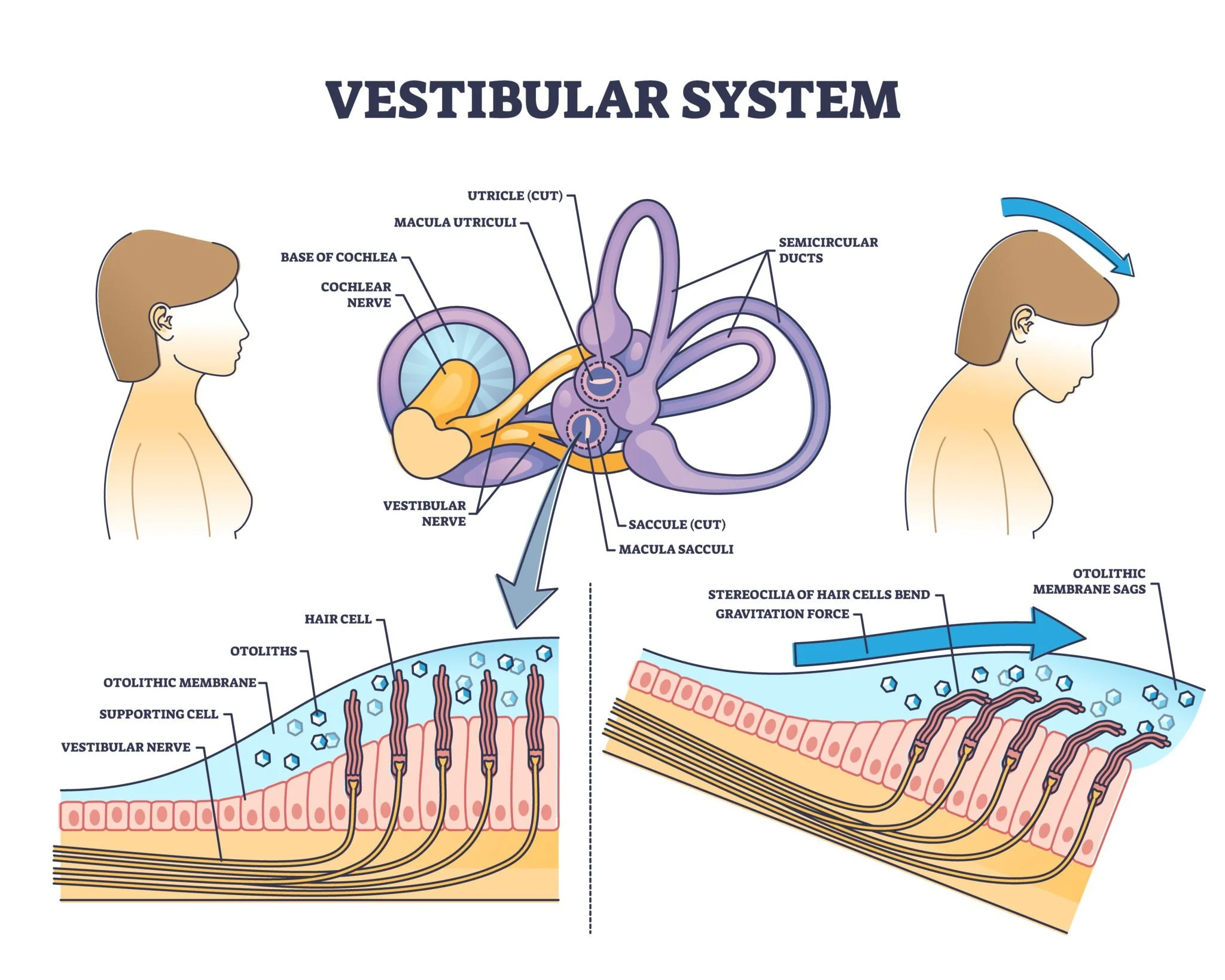
The vestibular system provides your brain information on your body’s relationship to gravity. Imagine your brain is a computer and your inner ears are its built-in GPS. Usually, they work together to tell you exactly where you are in space. Vestibular Rehabilitation is essentially "re-calibrating" that GPS when it starts sending faulty signals.
Here is the breakdown of why it's needed and how it works:
Why do I feel dizzy?
The eyes, inner ear (vestibular system), and your joints/muscles work together to give your brain information on your body’s position in relation to gravity. When your inner ear is damaged or impaired (by an infection, a head injury, or displaced ear crystals), it sends a signal to your brain that doesn't match what your eyes are seeing. This results in dizziness.
Vestibular impairment can come from anywhere along the vestibular pathway in the brain. This includes visual information from the eyes, peripheral vestibular system in the inner ear, central vestibular system in the brain, and even from joint receptors in the neck.
Vestibular Therapy Retrains the Brain
Unlike a broken bone that just needs a cast to heal, the vestibular system often needs to be challenged to get better. Vestibular Rehab is a specialized form of physical therapy that uses specific exercises to teach your brain how to handle these mixed signals.
There are four main ways we do this:
Repositioning Maneuvers: If an inner ear crystal (otolith) has come loose it results in a condition known as BPPV. This is treated with a repositioning maneuver (like the Epley) to bring it back in place.
Habituation: We find the specific movement that makes you dizzy (like looking up or rolling over) and repeat it gently. Over time, your brain learns to ignore the false alarm, and the dizziness fades.
Gaze Stabilization: These exercises help your eyes stay focused on a target while your head is moving. This stops the "shaking" or blurred vision you might feel when walking. Visual exercises are often a big part of vestibular rehabilitation.
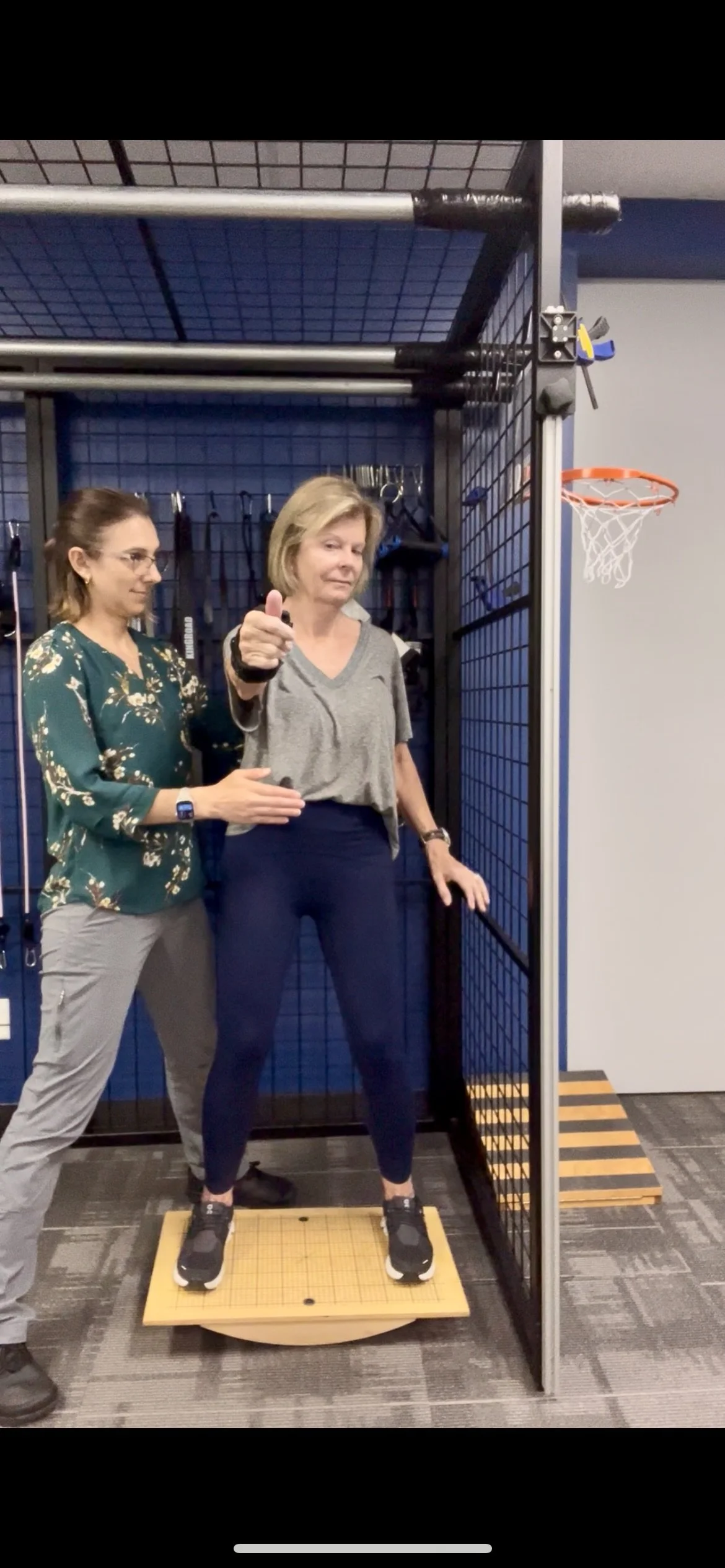
Balance Retraining: We use tools like the SoloStep overhead track to challenge your balance in a safe environment, teaching your body to rely more on its muscles and joints while the inner ear recovers.
What is BPPV
The most common reason people need vestibular therapy is a condition called BPPV. Inside your ear are tiny calcium crystals called otoliths. If they fall into the wrong canal, they send a massive spinning signal to your brain every time you move your head.
In this case, repositioning maneuvers (like the Epley Maneuver) are utilized by a trained physical therapist to get the crystals back to where they belong. Relief is often almost instant.
The Goal with Vestibular Physical Therapy
The end result of Vestibular Rehab isn't just not feeling dizzy, it's confidence. It’s about being able to walk down a grocery store aisle, drive your car, or turn your head to talk to a friend without feeling a sense of balance loss.