

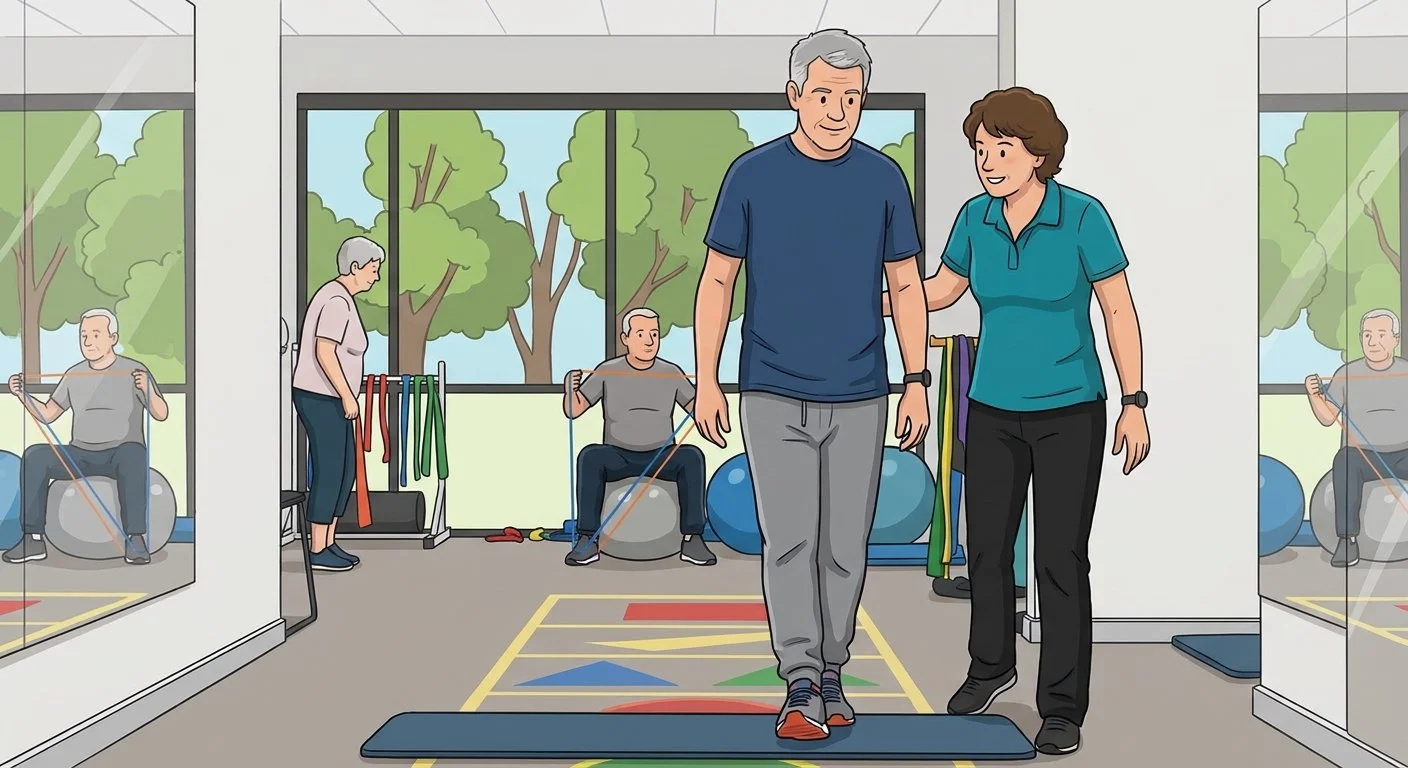
Beyond Medication: How Continuous Physical Therapy Helps You Take Control of Parkinson’s
Receiving a Parkinson’s disease diagnosis can feel overwhelming, but it doesn't mean giving up control. While traditional care often relies on medication and short, sporadic bursts of therapy, recent research highlights a far more effective path. Discover how continuous, long-term physical therapy can help preserve motor function, reduce reliance on higher medication doses, improve balance, and empower you to live actively and confidently with Parkinson’s.

Help! They told me I have Foot Drop: Can Physical Therapy Help?
Catching your toes while walking? Foot drop is a common symptom following a stroke, nerve trauma, or spinal cord injury. Read our quick guide to understand what’s causing your symptoms and how specialized neurological PT can aid your recovery.

Can Vertigo Originate at the Neck?
Feeling dizzy, lightheaded, or off-balance without a clear cause? The root problem might not be in your inner ear at all. Discover how upper neck tension and cervical spine dysfunction create sensory mismatches in the brain and how targeted physical therapy can help you regain your balance.

Understanding Cerebellar and MCA Strokes
While most people recognize a stroke by classic signs like facial drooping or arm weakness, strokes affecting the back of the brain present a completely different set of warnings. Unlike Middle Cerebral Artery (MCA) strokes (which disrupt core muscle power and language) cerebellar strokes target the body’s balance center, causing severe vertigo, uncoordinated movement, and rapid eye jerking. Understanding the difference between a failure of coordination and a failure of power can mean the difference between a missed diagnosis and life-saving intervention.

How Jumping Exercises Can Improve Bone Density and Prevent Osteoporosis
Can jumping really protect your skeleton? While we often focus on diet for bone health, "impact loading" is one of the most powerful ways to signal your body to build a stronger frame. From strengthening the fracture-prone femoral neck to building a "bone reserve" for your later years, discover how simple, high-impact movements like jumping can be a game-changer for bone mineral density and long-term osteoporosis prevention.

Can AI help me find good therapy for stroke? Part 2

What is an NCS Physical Therapist- Part 1

Turn Everyday Tasks into Exercises for Stroke Recovery
Turning everyday tasks into functional exercise isn't just about saving time; it’s about neuroplasticity- the brain's incredible ability to rewire itself through repetitive, meaningful movement. Here is how you can turn your daily routine into a powerful recovery circuit.

Hidden Signals: New Research Rethinks Complete Spinal Cord Injury
A "complete" spinal cord injury diagnosis may not mean every connection is lost. Learn about discomplete SCI, what recent research reveals about residual neural pathways, and how specialized physical therapy can awaken hidden recovery potential.

Feeling Unsteady? New Balance Training for Seniors that Actually Works
Did you know falls are not an inevitable part of aging? Just like muscle strength, your balance gets stronger with practice or weaker with neglect. Learn how specialized Neuro Physical Therapy and Perturbation-Based Training (PBT) can help you regain your confidence and prevent falls.
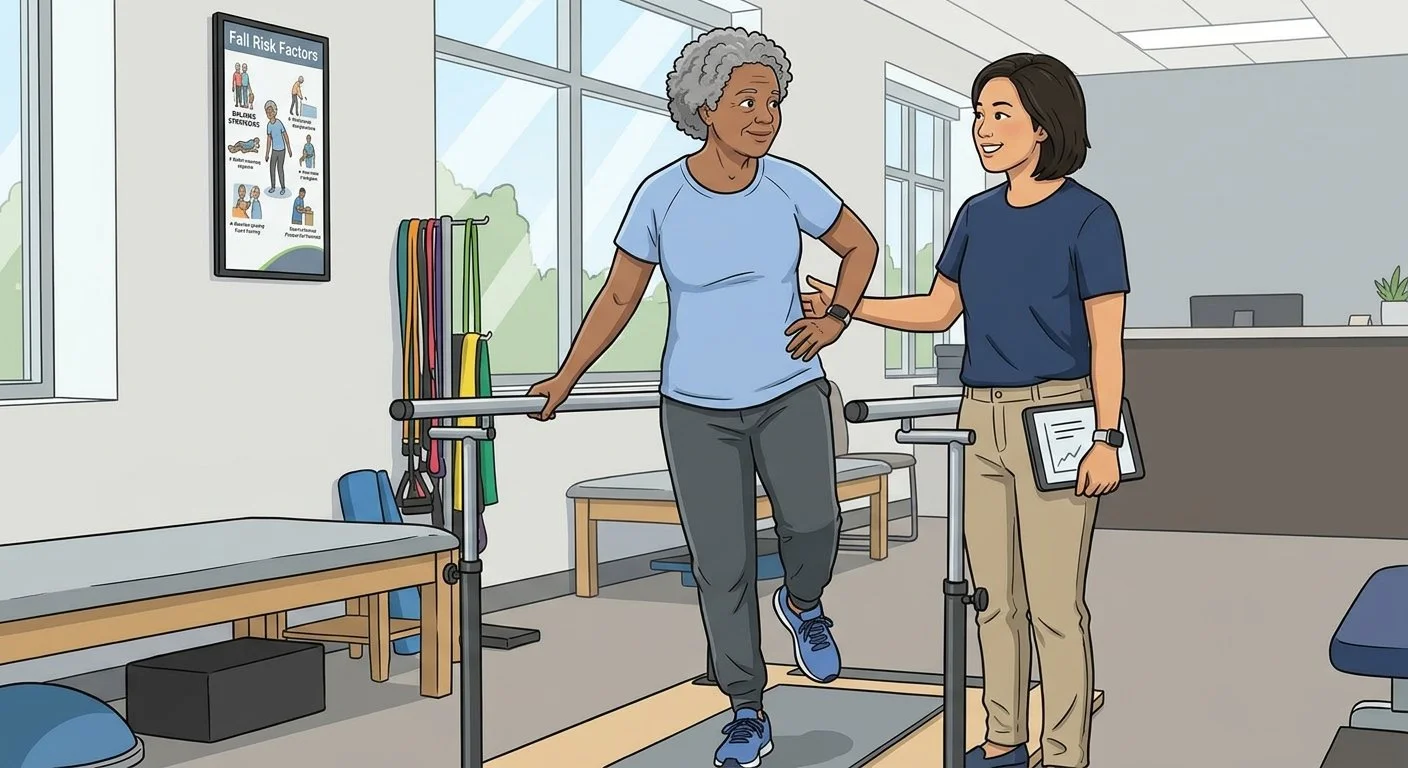
Take Control of Your Balance: Fall Prevention at Audia PT
Did you know falls are the leading cause of injury-related death in adults over 65? The good news is that most falls are preventable. Learn how regular balance screening and targeted physical therapy can help you build strength, boost confidence, and stay independent.

The Hidden Link Between Dizziness, Vertigo, and Frailty in Older Adults
Frailty isn't just an inevitable part of aging, it often has a hidden, treatable cause. Learn how inner ear issues like BPPV contribute to balance problems and muscle loss, and try two quick, validated tests you can perform at home to assess your mobility and fall risk.

The Perfect Posture Prescription From Dr. Audia

Live Longer By Doing This One Thing!

Building a Formula For Lifelong Confident Mobility

Maximizing Stroke Recovery with Physical Therapy: Understanding the Importance of Neuroplasticity
"Unlock the power of neuroplasticity in stroke recovery with physical therapy! Learn how to tap into the brain's natural ability to adapt and change to regain strength, mobility, and independence. Discover the importance of early intervention, realistic goal setting and ongoing motivation in stroke physical therapy. Maximize your recovery and improve your quality of life! #strokerecovery #strokephysicaltherapy #neuroplasticity"

Recovering Automatic Walking
Recovering automatic walking involves more than just consistent practice. Learn about the science of automatic movement and the importance of specific training for decreasing attentional cost to free up your capacity to multitask.

Expectations Matter: How Enhanced Expectancy Can Lead to Greater Success
Enhanced expectancies is one of the 3 pillars of the OPTIMAL motor learning theory. Learn how this concept can provide incredible benefits to your brain, movement, and successful performance.

Choose Your Words Wisely: Changing a Few Words Can Change the Brain
Changing just a few words can have a massive impact on a person’s performance and learning. Find out how-

Autonomy: How The Power of Choice Can Improve Performance and Learning
Learn how choice can create a sense of autonomy and why this powerful feeling can regulate movement and enhance memory and performance. This is part of the series on the OPTIMAL Motor Learning Theory.