

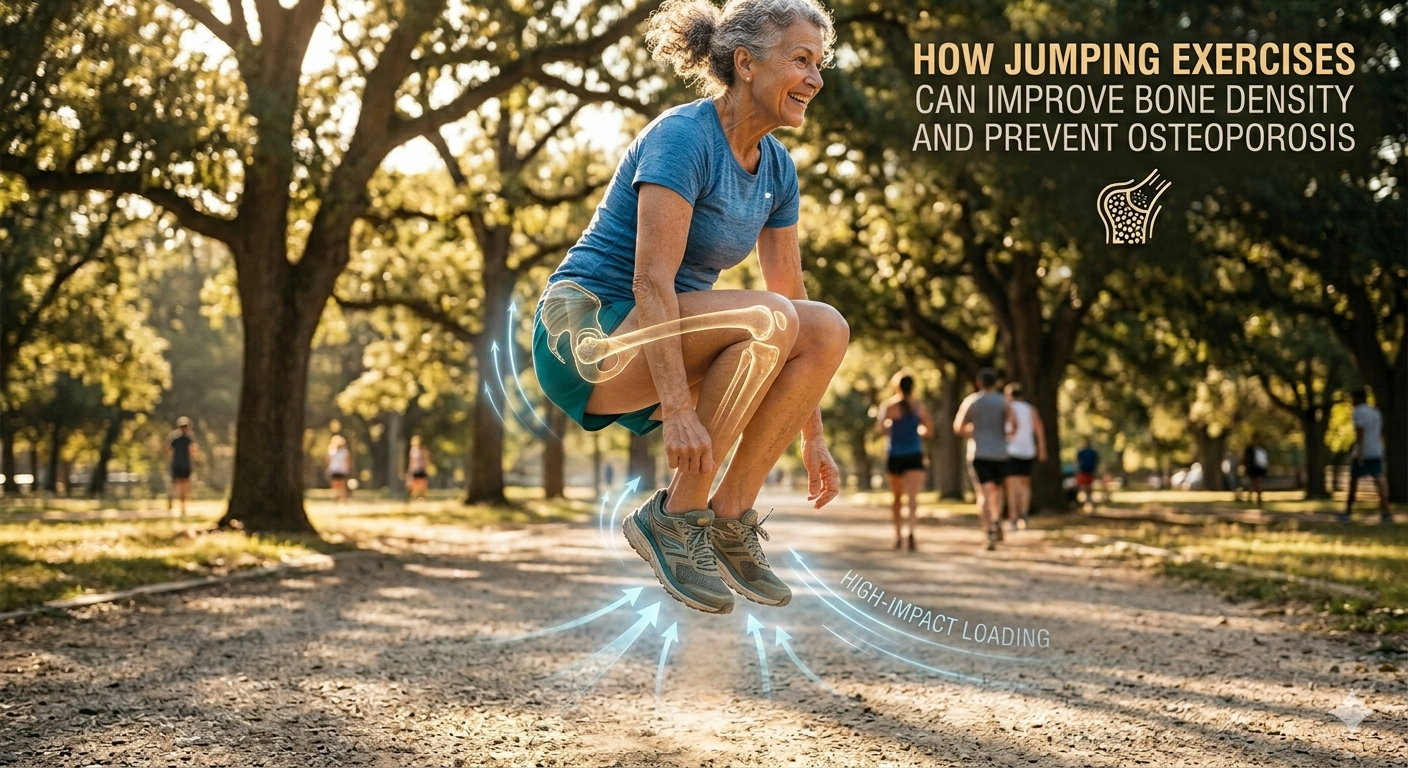
The Science of Impact: How Jumping Strengthens Your Bones
High-impact loading sends a clear signal to your body to remodel bone tissue and increase density, particularly in fracture-prone areas like the hips and femur.
Bones respond to mechanical stress: Short, controlled bursts of impact generate reaction forces that stimulate osteoblast activity (bone-building cells).
Hip density improvements: Research shows the most pronounced benefits occur at the femoral neck (the upper portion of the thigh bone.)
Targeted impact: High-impact forces tend to stimulate bone mineral density in the hips more directly than in the lower spine.
Building a "Bone Reserve" to Combat Age-Related Loss
Bone density typically peaks in our mid-to-late twenties before gradually declining with age. Engaging in high-impact exercise earlier in life helps build a higher peak bone mass (a "bone reserve" )which helps cushion against normal age-related bone loss later on.
How to Start Safely:
Frequency: Start with just 10 simple vertical hops per day, 3 to 4 days a week.
Rest intervals: Allow brief pauses between jumps; bones adapt best when given dynamic, broken loading patterns rather than endless continuous pounding.
Safety First: Exercise as a Complement to Medical Care
Jumping is a cost-free way to support skeletal health, but high impact is NOT SUITABLE for everyone.
Who should exercise caution: Avoid unguided jumping if you already have osteoporosis, joint degeneration, balance issues, or a history of fractures.
Safer alternatives: If high impact poses a risk, progressive resistance training, heavy carrying (rucking), and supervised balance exercises offer excellent bone-building and fall-prevention benefits without the peak landing forces. Always consult a physician or physical therapist before introducing high-impact movements to your routine.
Osteoporosis Care Under the Guidance of a Physical Therapist
At Audia PT, we specialize in guiding and coaching individuals to optimize their bone health to both prevent and manage osteoporosis. Grading the right intensity at the right time is important, give us a call and speak with a therapist regarding your unique needs.
References
Florence GE, Oosthuyse T, Bosch AN. Skeletal site-specific effects of jump training on bone mineral density in adults: a systematic review and meta-analysis. J Sports Sci. 2023;41(23):2063-2076. doi:10.1080/02640414.2024.2312052
Tucker LA, Strong JE, LeCheminant JD, Bailey BW. Effect of two jumping programs on hip bone mineral density in premenopausal women: a randomized controlled trial. Am J Health Promot. 2015;29(3):158-164. doi:10.4278/ajhp.130430-QUAN-200