

Neurological Rehabilitation in Encinitas
Your future need not be set by a neurological diagnosis. With a personal recovery plan, many people learn to move again, and in Encinitas that often means the beach paths or the stairs down to Moonlight Beach.
Regain Your Confidence: Neuro-Rehabilitation & Physical Therapy for Encinitas
Neurological Rehab & Physical Therapy Near Encinitas
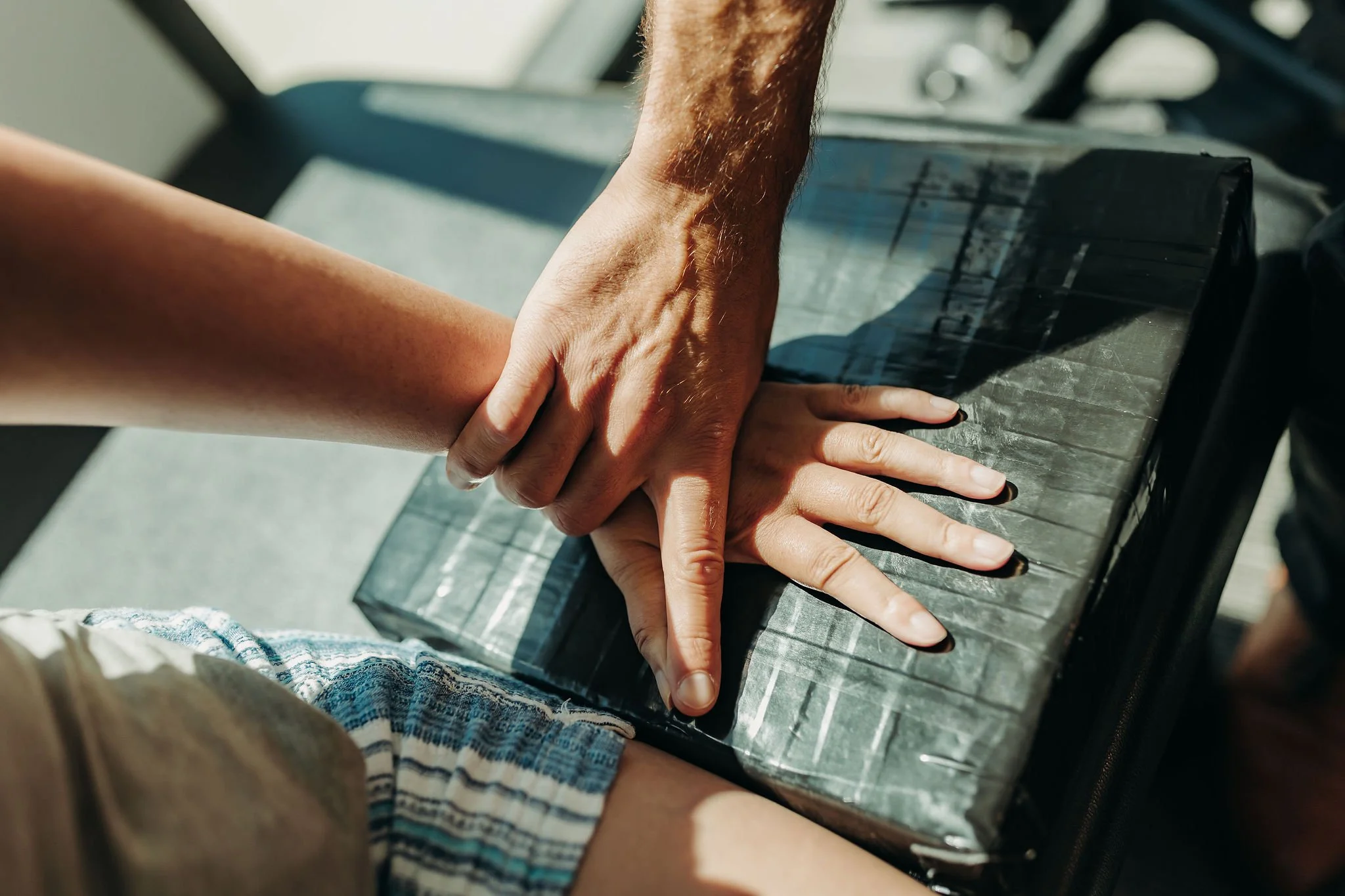
If a hand or leg no longer responds as it used to, the last thing anyone should face is a dispute with an insurer over which treatments are permitted. We chose a different model. Ours is a private, cash-pay practice that answers to the people we treat rather than to insurers, and that freedom gives each client from Leucadia or Olivenhain a program written around their own goals.
Your Partner in Neurological Recovery: Expert Care for Encinitas
Conditions such as stroke and Parkinson’s disease exact a heavy physical toll, although families often tell us the emotional strain is harder to carry because ordinary life seems to stop. Our therapists have already worked alongside hundreds of people in neuro-rehabilitation. We supply the clinical experience and a clear plan for each stage, while you supply the daily effort at home and in the clinic.
Your Recovery Path Starts Here
Step 1: Share Your Story
Injuries differ from person to person. Call (760) 652-3739 and tell us what happened.

Step 2: Feel the Difference
Commit to an initial month of care. During those weeks you begin a specialized therapy course focused on neuroplasticity.

Step 3: Take Ownership of Your Recovery
Stay with the plan week after week, and many clients win back lost movement and the self-assurance that follows.
Audia PT in the Press
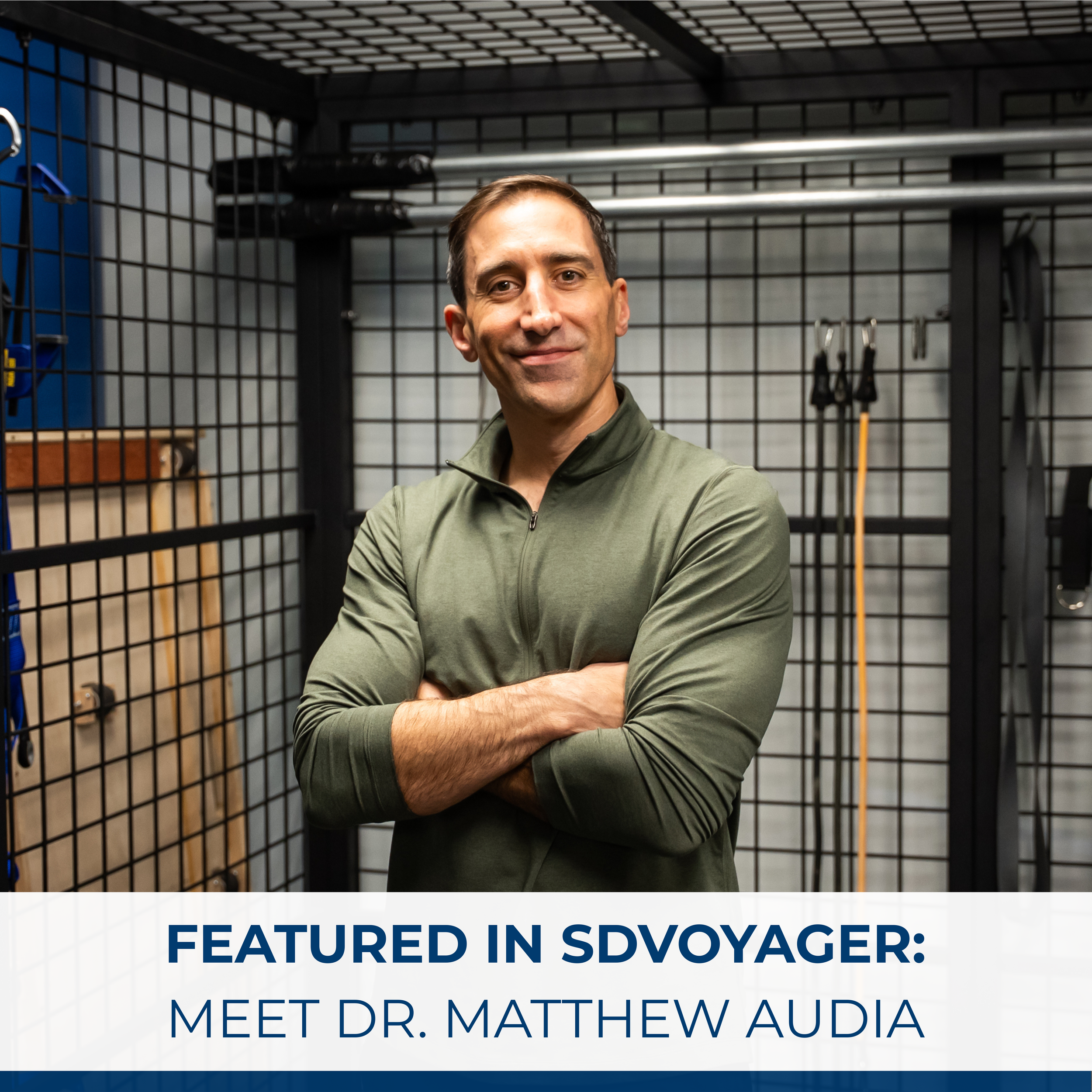
On SDVoyager, Matthew Audia discusses his advanced specialist training and the commitment to patient outcomes behind the clinic. Use the link below for the whole interview.
Trusted Neurological Recovery & Physical Therapy Specialists for Encinitas
Reclaim Confidence Through Neurological Rehab
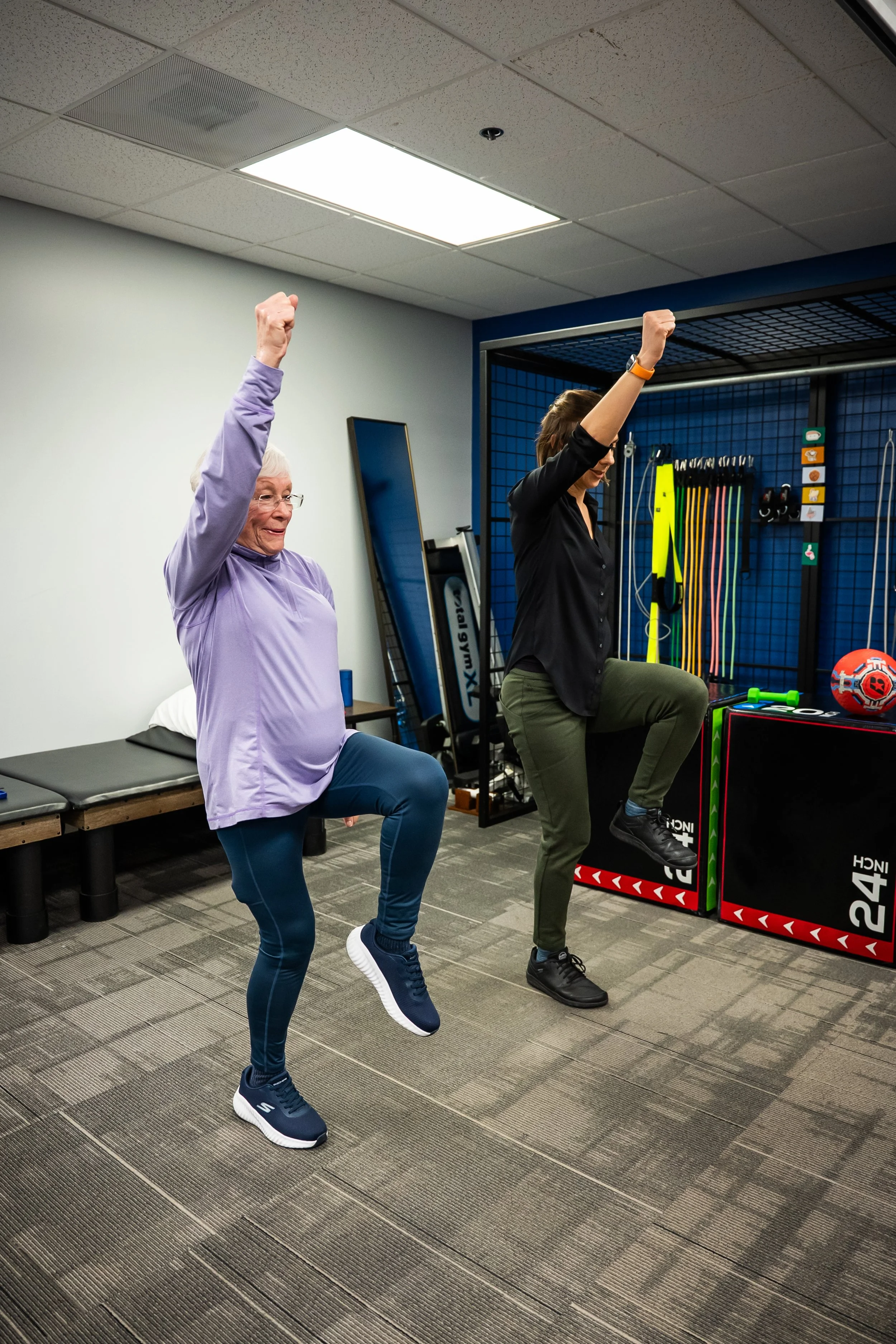
Days matter in neurological recovery. Once a person decides that progress cannot happen, that belief tends to fulfill itself, because waiting is seldom a neutral pause and often means a gradual loss of ground. Without active treatment, deficits can lead to poorer function and lasting complications.
Recovery should not sit idle. Contact us and begin now.
Audia Physical Therapy Clinic in Carlsbad, Serving Encinitas
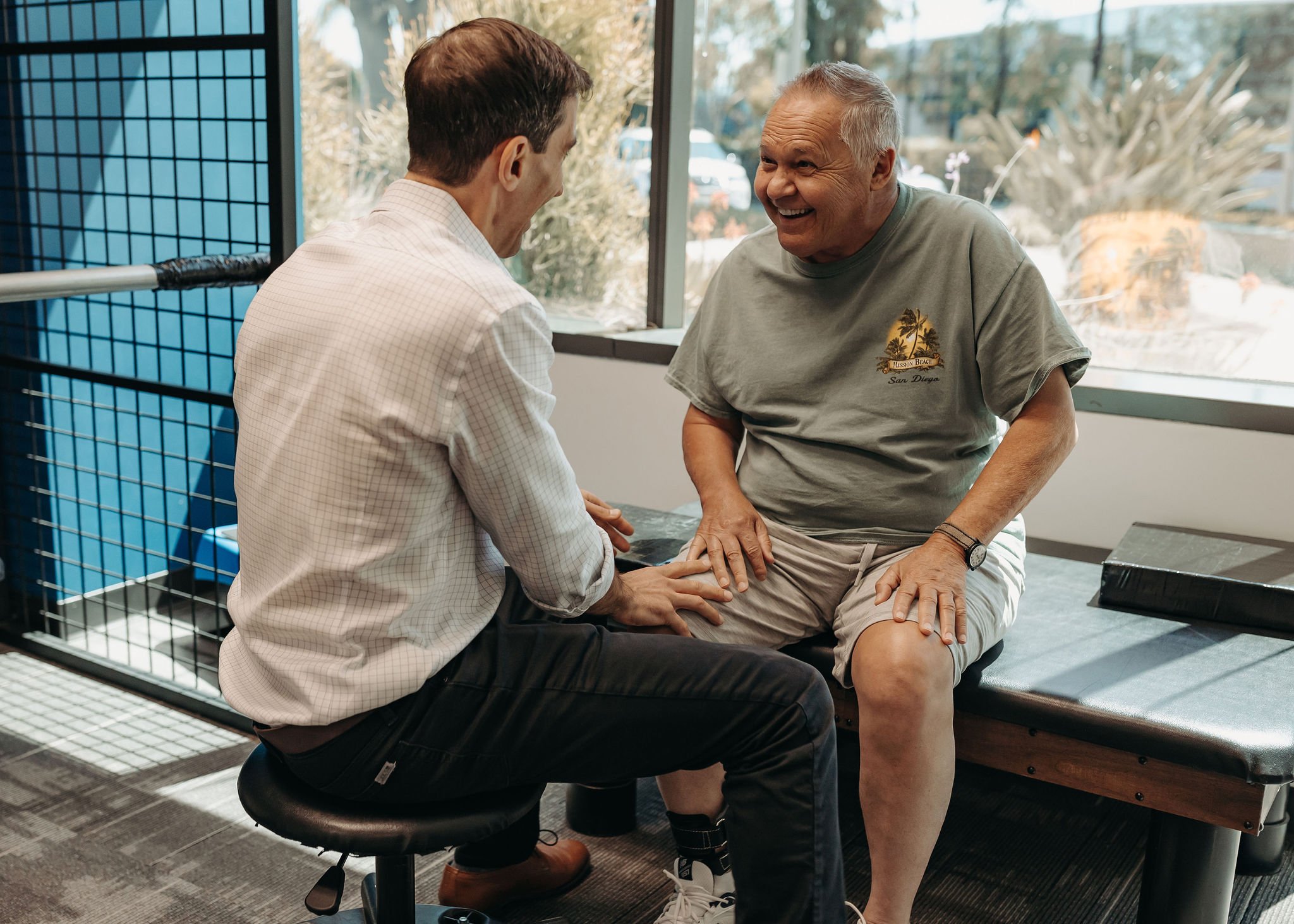
You will find us at Carlsbad Airport Plaza, close to Palomar Airport. Because Encinitas sits just south of Carlsbad, getting here means a short drive north on Interstate 5 or Coast Highway 101. Daylight pours in through large windows. The space stays quiet and intimate by choice, because one-on-one neurological work goes better when your physical therapist keeps full attention on you throughout the session.
Frequently Asked Questions About Neurological Rehab
-
Neurological rehabilitation uses neuroplasticity (the way the brain reorganizes itself and grows new connections) together with high repetition of real tasks, and that combination helps patients relearn how to move. We apply it after stroke or brain injury and in Parkinson’s disease, and we also use it for vestibular or balance problems and for complex orthopedic cases. No two recoveries look alike. Progress seldom climbs at an even rate, and for that reason we draft every treatment plan at Audia Physical Therapy around a single client.
-
Patients from Cardiff-by-the-Sea and New Encinitas make the drive to our Carlsbad clinic for neurological therapy when they are recovering from a stroke or TBI, living with multiple sclerosis or Parkinson’s disease, or following spinal cord injury or Guillain-Barré syndrome. We also see cerebral palsy, vestibular disorders, balance concerns with aging and orthopedic rehabilitation. We shape each program around your diagnosis and goals, such as walking Coast Highway 101 on steady feet.
-
We chose cash-pay because insurance-based care frequently caps session length and visit numbers, and payers also choose which treatments to authorize. Restrictions of that kind can block the care a patient most needs. Recovery after neurological injury relies on repetition and individual attention, and both require time. Because we stay outside insurance, we can shape care around what you need and give you real time without interruption at every visit.
We concentrate on physical therapy for neurological recovery, whether the cause is a stroke, a TBI, Parkinson’s disease or another condition of the nervous system. In each one-on-one hour we work toward your own goals, from better balance and walking to the strength and coordination that daily independence depends on.
Clients without Medicare may request a superbill to file with their private insurer for possible reimbursement. Medicare is a separate case. If Medicare covers you, we are unable to bill Medicare or a secondary plan through a superbill.
-
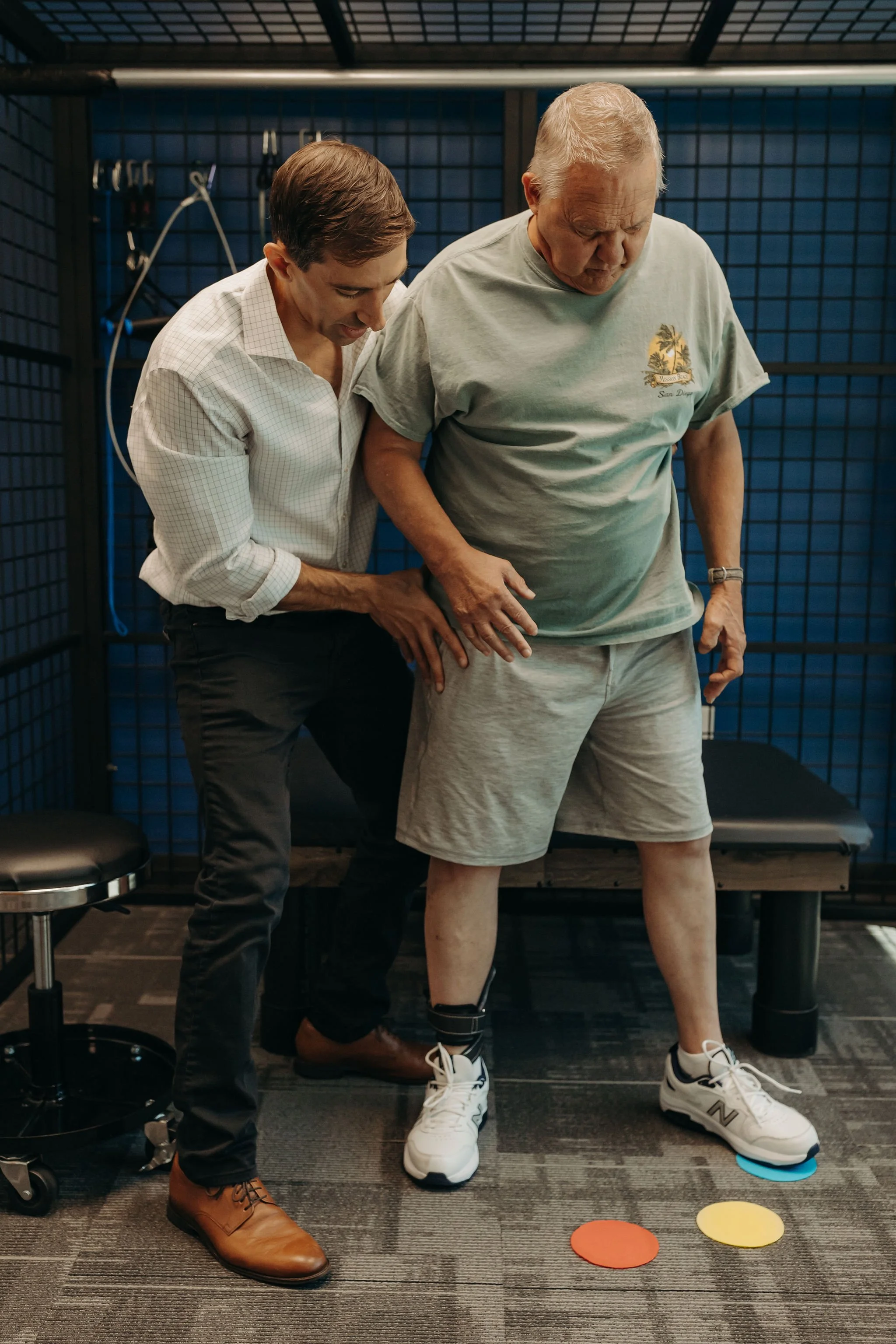
We never schedule anyone for under an hour, and for some diagnoses a session extends to three hours. After a stroke or TBI, most clients attend at least twice weekly. That length is deliberate. The cash-pay model makes it possible, and we spend the time working through what your nervous system and body require, with rest breaks for fatigue management planned into the hour.
-
Yes, on every occasion. Aides and assistants never take over your care here. The physical therapist you see regards you as family and is personally invested in your progress, because our whole team is working toward your full potential. You and that same therapist work together in a calm corner of the gym reserved for your visit.
-
Care here covers the entire person, head to toe. Depending on your situation, we might write out a home exercise program, coach a spouse or caregiver to assist, alter a brace, refit the seating system on your wheelchair, or change the shoes you walk in. We can also provide equipment for the hand and for fine-motor work. We never refer that work out to other providers. Whatever stands between you and independent movement belongs in your plan of care.
-
Few questions arrive as often at a first appointment, and the timing reflects a real mechanism rather than chance. A stroke or similar event can alter how a person walks or holds themselves, and the hips, back or opposite leg then absorb extra work that can show up later as unfamiliar pain. Our approach is to search for the source of the problem instead of chasing each symptom, and the plan then concentrates on correcting it through gait retraining and balance practice.