

Neurological Rehabilitation in Oceanside
Losing ground after a neurological event can feel permanent, yet it is rarely the final word. Families from Oceanside, just north of our clinic, find a recovery plan shaped around one person's deficits and goals, aimed at relearning movement.
Restore Your Confidence: Neuro-Rehabilitation & Physical Therapy for Oceanside


Neurological Rehabilitation & Physical Therapy Near Oceanside
Few things are as discouraging as a leg that will not answer a command, and arguing with an insurer about authorizations only adds to the strain. Audia runs as a private, cash-pay practice. Because our clients pay us directly, we answer to them rather than to a payer, and every program can be individual from the first visit onward, centered on the care each person actually wants.
Partnering in Your Neurological Recovery: Expert Care for Oceanside
A stroke or a Parkinson’s diagnosis strains a person emotionally as much as physically, and the weeks that follow can seem suspended. Over the years, hundreds of neuro-rehabilitation clients have trained with our therapists. You contribute persistence; we contribute clinical expertise and the plan. Camp Pendleton borders Oceanside, and our clinic works with veterans and family members recovering from TBI and other neurological conditions.
Begin Your Path to Recovery Here
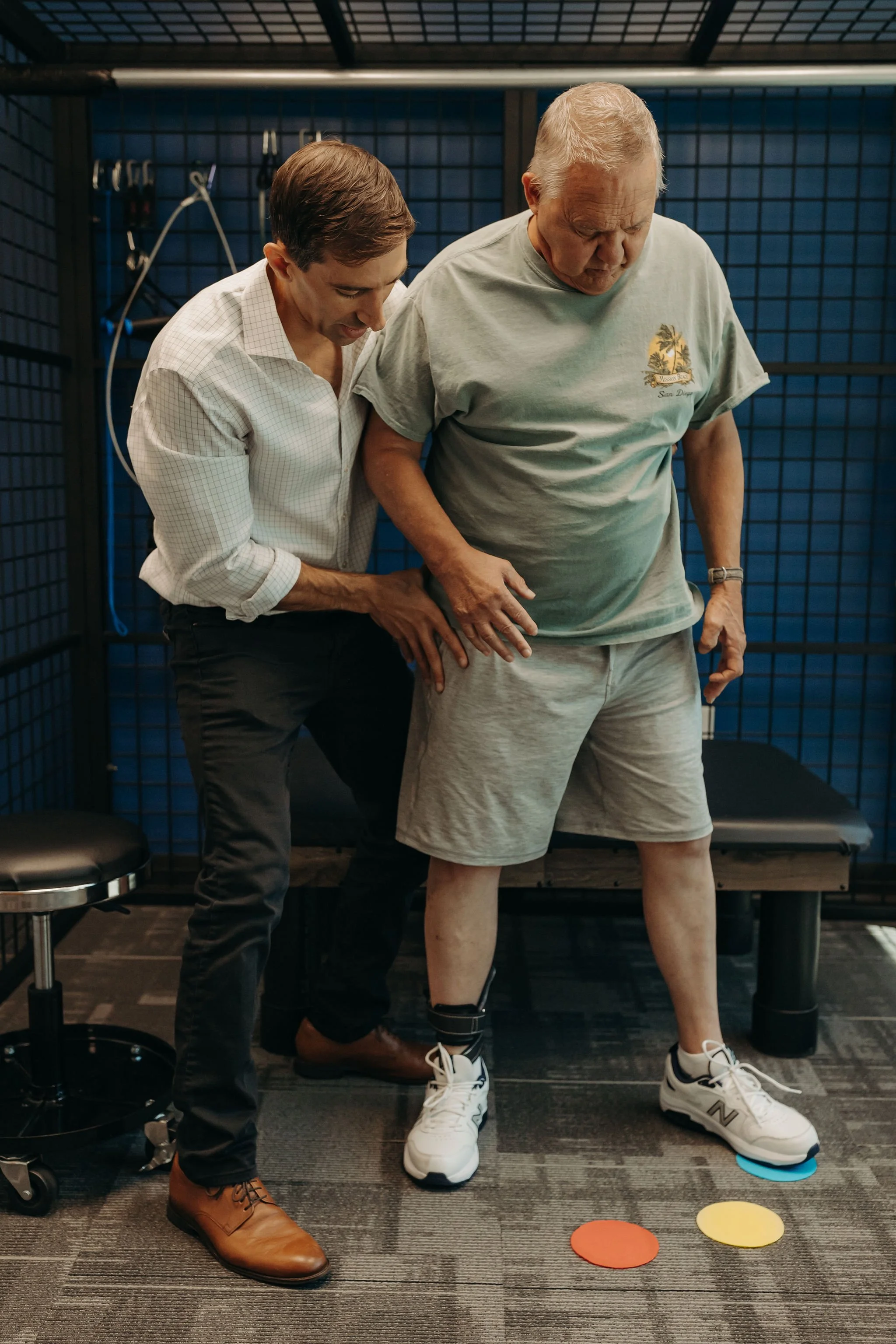
Step 1: Start With Your Story
Your injury has its own history. Call (760) 652-3739 and tell us yours.

Step 2: See What Changes
Enroll for an initial month. Over those weeks you complete a specialized program of therapy centered on neuroplasticity.

Step 3: Take Charge of Your Recovery
Practice the program faithfully. With time, many clients regain movements and confidence they depend on.
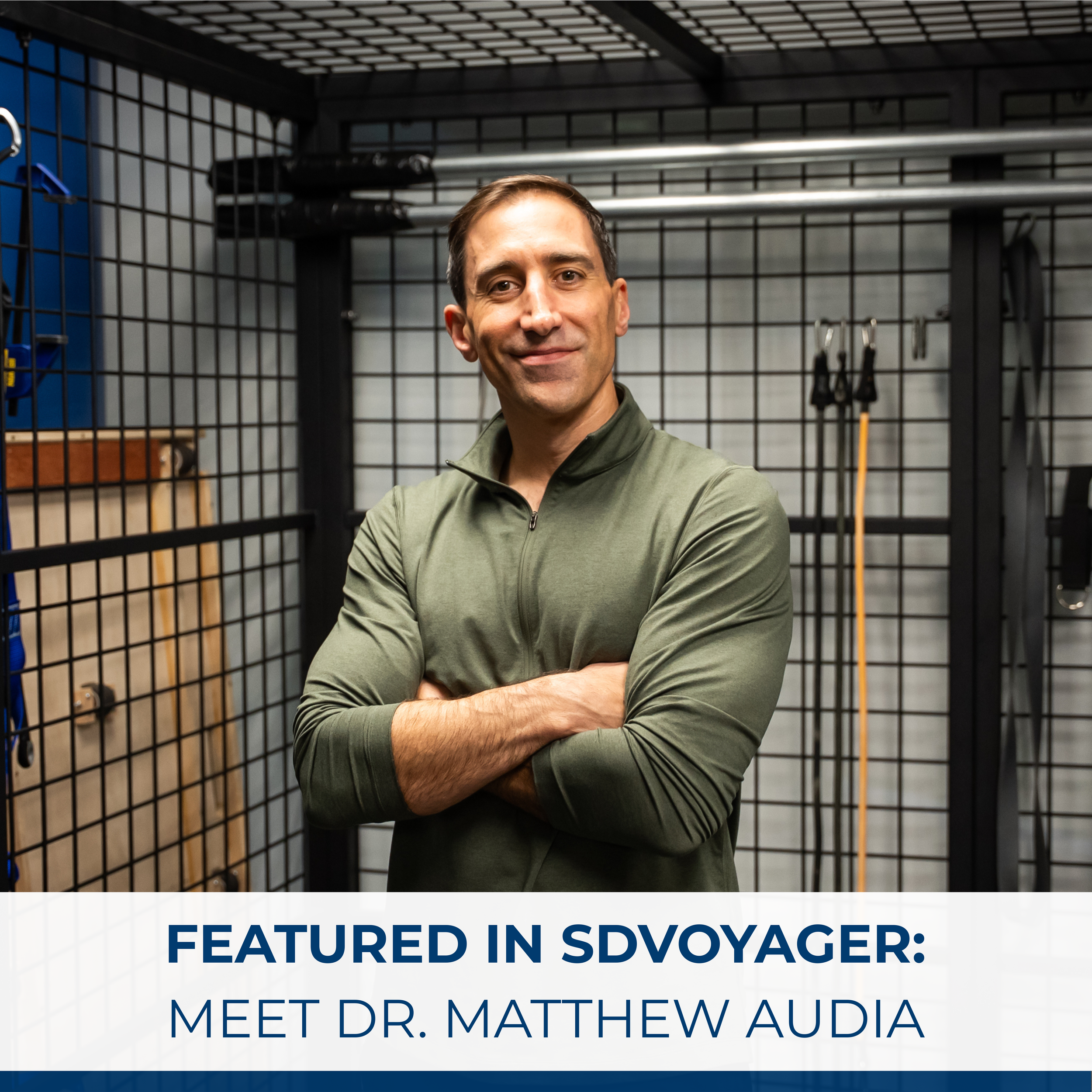
News Coverage of Audia PT
The SDVoyager profile of Matthew Audia explains the advanced specialist training behind our clinic and our steady focus on patient outcomes. Follow the link to read it in full.
Trusted Specialists in Neurological Recovery & Physical Therapy for Oceanside
Reclaim Your Confidence With Neurological Rehabilitation
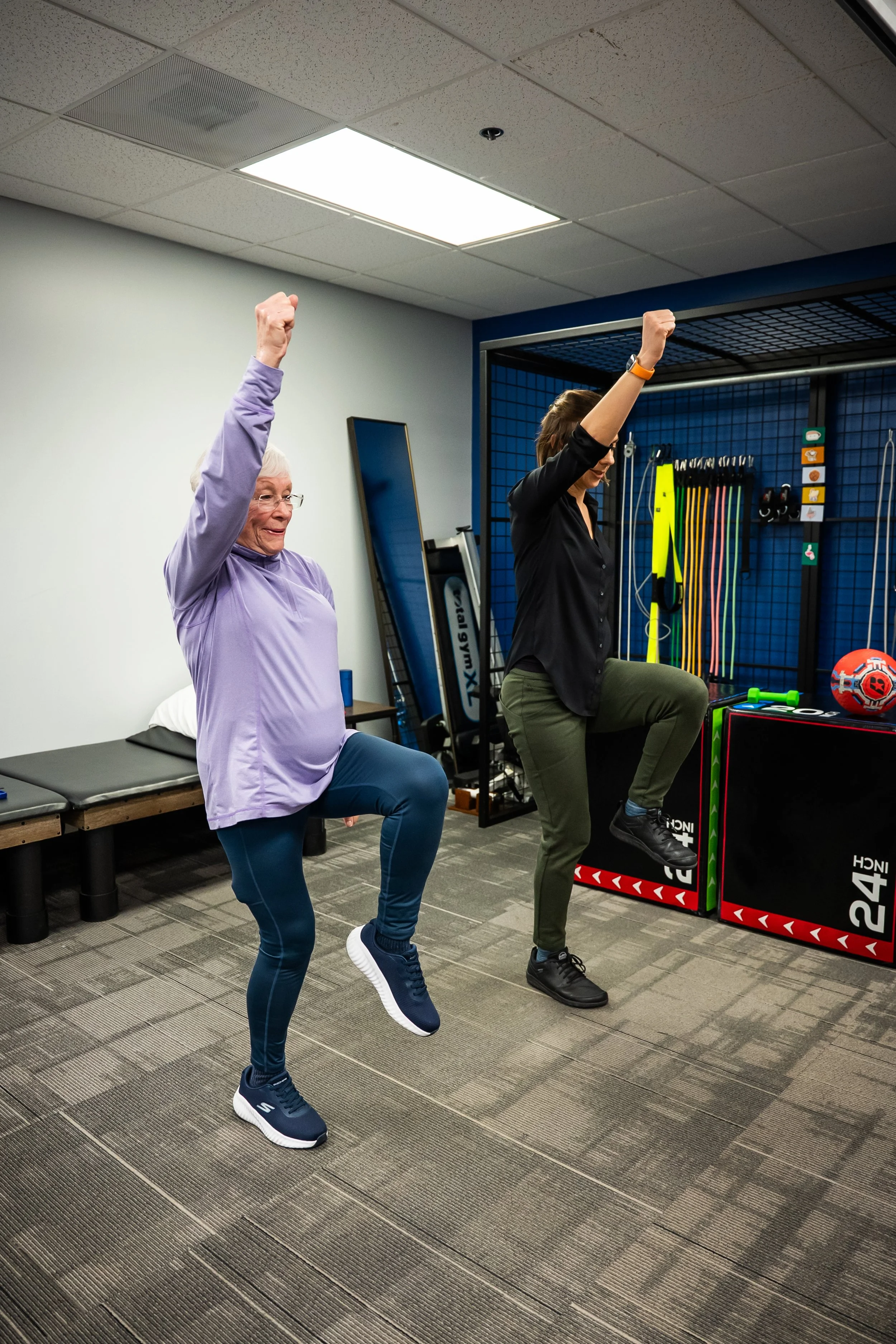
Neurological recovery is sensitive to time. Assuming you will not improve tends to make that prediction come true. Waiting for change to arrive on its own rarely leaves a person where they started, because deficits that go untreated can gradually worsen and lead to complications that last for years.
Recovery should not stall. Book your first visit and start moving forward this week.
Audia Physical Therapy Clinic in Carlsbad, Next Door to Oceanside
Audia Physical Therapy is in Carlsbad Airport Plaza near Palomar Airport. From Oceanside, the next city to the north, you can reach us by heading south on Interstate 5 or taking El Camino Real. Sunlight comes in through large windows, and the clinic stays calm and small by choice, with your physical therapist working beside you one-on-one and giving you full attention.
Frequently Asked Questions About Neurological Rehab
-
Neuro-rehab works through neuroplasticity: the brain can reorganize and wire new pathways, and repeated, purposeful practice is how a person relearns walking or reaching. That principle guides our work after stroke or brain injury and with Parkinson’s disease, and we apply it to vestibular problems and balance disorders as well as complicated orthopedic presentations. Recovery from these conditions moves in fits and starts. Because no two people follow the same course, even when their diagnoses match on paper, Audia Physical Therapy writes every plan of care for one individual.
-
Oceanside residents travel south to Carlsbad for stroke recovery and for rehabilitation after a traumatic brain injury. Our neuro-rehab services also cover Guillain-Barré syndrome and Parkinson’s disease. Other clients arrive with multiple sclerosis, cerebral palsy, spinal cord injury or vestibular disorders, and we also treat balance problems related to healthy aging as well as orthopedic conditions. Whatever brings you in, we plan around your specific diagnosis and the activities you hope to do confidently again.
-
We chose the cash-pay route because insurance-based care frequently restricts how long each session lasts and caps the visit count, and some treatments may never be approved by the payer at all; any one of those restrictions can interfere with good care. Neurological recovery takes many hours of repetition. It also takes individual attention. Stepping out of the insurance model lets us plan each course of care around your actual needs, and every session keeps its full, uninterrupted time.
Our practice concentrates on neurological rehab delivered through physical therapy. We see clients after stroke or TBI and also treat Parkinson’s disease plus other disorders of the nervous system, always one-on-one. Some clients come to improve balance and walking. Others want more strength and coordination, or more independence and self-assurance at home.
If you do not have Medicare, you may ask us for a superbill and file it with your own insurer to seek reimbursement. Medicare is handled differently. For clients with Medicare, we cannot issue a superbill for submission to Medicare or to a Medicare secondary plan.
-
No visit is shorter than one hour. Depending on the diagnosis, a session may extend to three hours, which leaves room for gait practice with many repetitions and for balance drills, with pauses whenever fatigue builds. Clients in recovery after a stroke or TBI usually attend twice a week or more. Long sessions are possible under a cash-pay model, and we spend that time figuring out precisely where your nervous system and muscles need work so that you can function as well as possible.
-
You see your physical therapist at every single session. No visit at Audia Physical Therapy is ever passed to a therapy aide or assistant, because helping clients reach their full potential calls for the clinician's own hands and judgment from start to finish. You are treated like family by someone invested in your progress, and the work happens in a quiet part of the gym kept for one-on-one sessions.
-
Our care addresses the whole person. For one client that means a home exercise program and a revised brace; for another it means adjustments to a wheelchair seating system or a change of footwear. When hand function or fine-motor control calls for equipment, we supply it. We do not outsource any of it. If a problem restricts your movement or your ability to look after yourself, it belongs in the plan we build toward your goals.
-
Many new clients raise this during their first visit, and the timing usually has an explanation. A person who favors a weak side or walks with an altered pattern loads other joints and muscles in unfamiliar ways, and over months those compensations in gait and posture frequently surface as fresh pain in another area. Quieting symptoms is only part of our aim. We search out the underlying cause and organize your plan around correcting it.