

Receiving a Parkinson’s Disease (PD) diagnosis can feel overwhelming, but a diagnosis isn't a dead end, it’s the start of a proactive action plan.
While Parkinson’s affects roughly 1.6 out of every 1,000 people globally, causing symptoms like stiffness, tremors, slowed movement, and balance challenges, how you manage it makes all the difference. Traditionally, treatment relies on medication alongside sporadic bursts of physical therapy that start and stop based on insurance limits. However, research shows that a continuous, long-term approach yields far better results.
Why Long-Term Physical Therapy is a Game-Changer
Parkinson’s responds exceptionally well to targeted physical therapy, particularly exercises designed to retrain motor planning. Rather than relying on short-term "fixes," ongoing movement management offers major long-term advantages:
Sustained Motor Function: A 2022 meta-analysis (Ji et al.) demonstrated that receiving ongoing physical therapy for at least six months significantly improves motor symptoms compared to episodic care.
Lower Medication Dependence: Continuous therapy helps slow functional decline (which can reduce the required dosage of medications like Levodopa) minimizing the risk of long-term drug-related side effects.
Better Mobility & Independence: Long-term physical therapy directly targets movement quality, leading to faster walking speeds, improved posture, better balance, and fewer frightening "freezing of gait" episodes.
What a Complete Parkinson’s Exercise Plan Looks Like
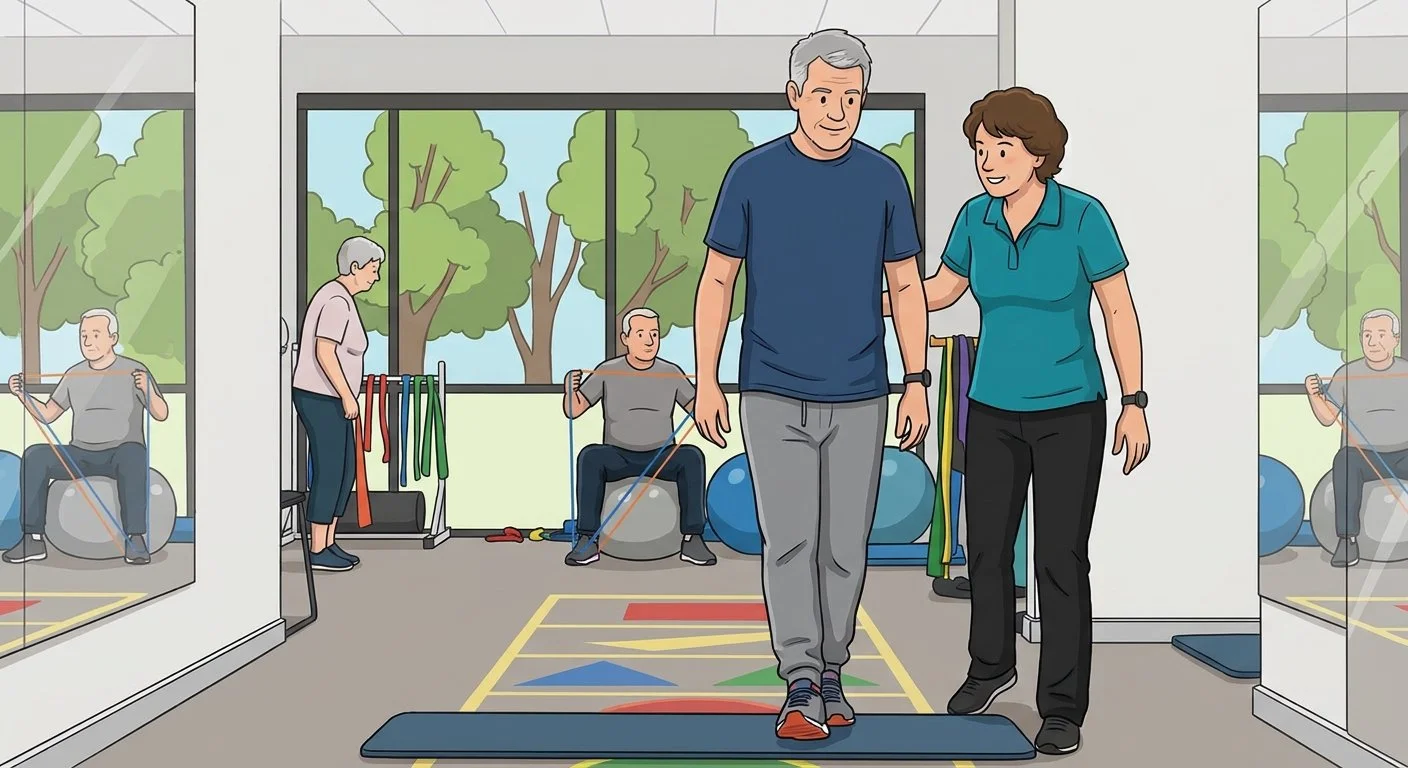
According to clinical practice guidelines from the American Physical Therapy Association (Osborne et al., 2022), an effective management plan shouldn't just be a few simple stretches. To truly thrive, your routine should incorporate:
High-Intensity Aerobic Exercise & Resistance Training: Builds cardiovascular endurance and preserves muscle strength.
External Cueing & Task-Specific Training: Uses auditory or visual prompts to help the brain bypass movement blocks and improve gait quality.
Flexibility & Balance Work: Prevents rigidity, improves posture, and reduces fall risks.
Community-Based Group Classes: Helps address non-motor symptoms like mood, motivation, and social connectivity.
Behavioral & Multidisciplinary Support: Equips you with strategies to maintain lifelong activity habits safely at home alongside your broader care team.
If you or a loved one has recently been diagnosed, don't wait for movement issues to progress. Partner with a physical therapist early to build a consistent, proactive exercise routine that keeps you moving with confidence. At Audia PT we can design whole programs, or fill in the gaps that insurance based therapy leaves behind.
References
Ji, X., Lu, D., Yang, Q., Xiao, L., Wang, J., & Wang, G. (2022). Physical Therapy for at Least 6 Months Improves Motor Symptoms in Parkinson’s Patients: A Meta-Analysis. Computational and Mathematical Methods in Medicine, 2022, 3393191.
Osborne, J. A., Botkin, R., Colon-Semenza, C., DeAngelis, T. R., Gallardo, O. G., Kosakowski, H., Martello, J., Pradhan, S., Rafferty, M., Readinger, J. L., Whitt, A. L., & Ellis, T. D. (2022). Physical Therapist Management of Parkinson Disease: A Clinical Practice Guideline From the American Physical Therapy Association. Physical Therapy, 102(4), pzab302.