

Help! They told me I have Foot Drop: Can Physical Therapy Help?
Understanding Foot Drop: Causes, Symptoms, and Recovery
Foot drop is the inability or difficulty to lift the front part of the foot—a movement known medically as dorsiflexion. When this occurs, the toes catch on the ground while walking, creating a tripping hazard and significantly altering gait. It is caused by nerve disruption affecting the primary muscles responsible for lifting the foot: the tibialis anterior and peroneal muscles.
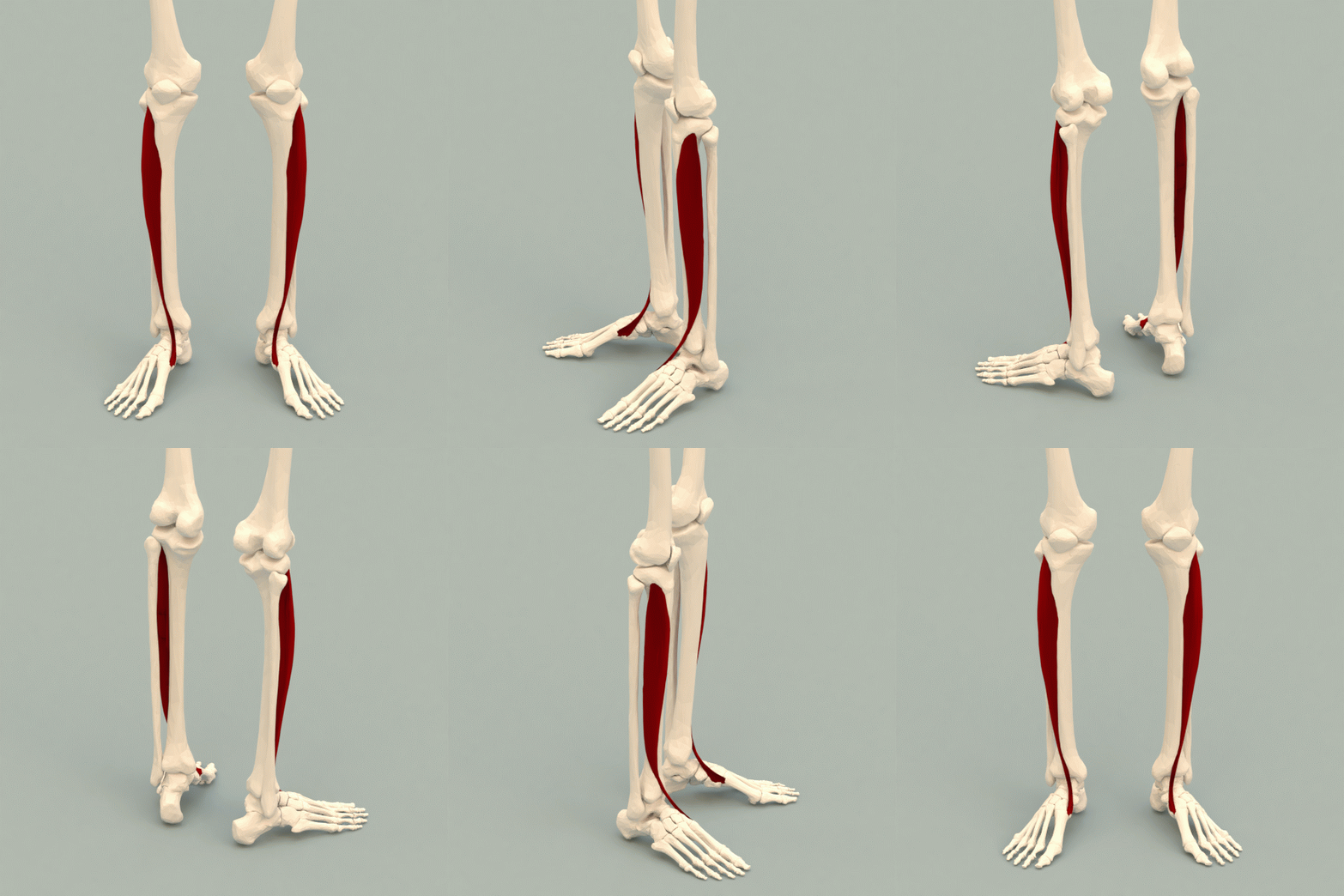
By Polygon data were generated by Database Center for Life Science (DBCLS) - Polygon data are from BodyParts3D, CC BY-SA 2.1 jp, https://commons.wikimedia.org/w/index.php?curid=84525637
Common Causes of Foot Drop
Foot drop is a symptom of an underlying neurological or physical condition rather than a standalone disease. Key causes include:
Peripheral nerve injuries (such as peroneal nerve trauma or Guillian-barre syndrome)
Spinal cord injuries or disc herniations
Stroke or traumatic brain injury
Congenital or neuromuscular conditions
Tailored Neurological Rehabilitation
Because foot drop manifests differently depending on the underlying diagnosis, treatment must be customized:
Managing High Muscle Tone (Post-Stroke): Following a stroke, muscle function may start returning, but muscle tone often becomes imbalanced. If the calf muscles become significantly tighter (hypertonic) than the weak shin muscles, the foot is pulled downward. Rehabilitation focuses on reducing calf muscle tone while strengthening the tibialis anterior and peroneal muscles.
Restoring Range of Motion in Low Tone (Hypotonia): Conditions such as spinal cord injuries often result in low muscle tone across the entire leg, which can lead to joint stiffness. Therapy prioritizes joint mobilization to preserve flexibility alongside targeted interventions to reactivate dormant muscles.
Hope for Recovery
With specialized neurological rehabilitation, restoring muscle activation is possible in many cases. Even patients who have relied on Ankle-Foot Orthoses (AFOs) (braces that hold the foot up) for years can frequently reactivate neural pathways and regain independent dorsiflexion.
Ready to Take the Next Step in Your Recovery?
At Audia PT, we specialize in targeted neurological rehabilitation designed to help you regain muscle control, improve mobility, and reclaim your independence.